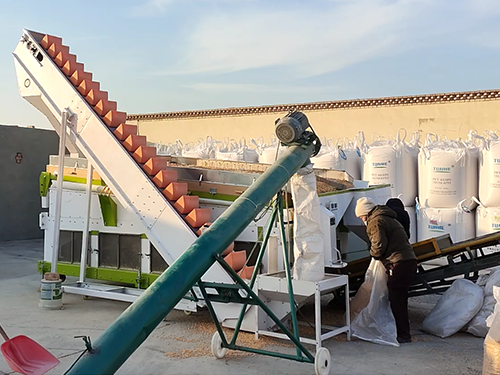
 Grain impurity remover play a vital role in grain processing and other fields. Proper maintenance is crucial to ensure their normal operation, extend service life and guarantee screening efficiency. Here are some common maintenance methods.
I. Daily Inspection
1. Visual Inspection
Conduct a thorough visual inspection of the grain impurity remover before starting it up every day. Check the machine’s shell for cracks, deformation and other defects. If cracks are found on the shell, repair them in a timely manner to prevent component damage or safety accidents caused by the expansion of cracks during operation. Meanwhile, inspect the machine’s connection parts such as bolts and nuts for loosening. Loose connections will affect the machine’s stability, possibly leading to increased vibration and subsequent damage to other parts. Tighten any loose bolts and nuts with appropriate tools.
2. Screen Inspection
The screen is one of the key components of a grain impurity remover and directly impacts screening efficiency. Check the screen for damage and clogging. A damaged screen will allow unqualified grain to pass through, reducing screening quality, and thus needs to be replaced promptly. Clogged screens will lower screening efficiency; use tools such as a brush to clean the screen and remove impurities stuck in the screen holes.
3. Transmission Component Inspection
Transmission components include belts, chains and the like. Check belts for wear and slackness. Severely worn belts are prone to slipping, which affects the machine’s normal power transmission and requires immediate replacement. Slack belts can be fixed by adjusting the belt tensioning device. For chains, inspect their lubrication condition and jamming issues. Add lubricating oil to chains regularly to ensure smooth operation.
II. Regular Lubrication
1. Lubrication Points
Bearings, gears and other parts of the grain impurity remover require regular lubrication. Friction occurs in these parts during operation; insufficient lubrication will accelerate component wear and shorten the machine’s service life.
2. Lubrication Methods
Select suitable lubricants according to different lubrication points and the machine’s instruction manual. For bearings, inject grease into them with a grease gun. For gears, apply or drip lubricating oil for lubrication. The lubrication frequency shall be determined based on the machine’s usage frequency and working environment. Generally, machines operating for long continuous periods require correspondingly shorter lubrication cycles.
III. Cleaning Work
1. Internal Cleaning
Clean the interior of the grain impurity remover regularly to remove residual grain, dust and impurities. Compressed air or a vacuum cleaner can be used to clear internal debris. Thorough internal cleaning is especially necessary when switching to screening different varieties of grain to prevent cross-contamination between different grains.
2. External Cleaning
Keeping the machine’s exterior clean not only enhances its appearance but also prevents dust and other impurities from entering the interior. Wipe the machine’s shell with a damp cloth to remove surface dirt. For stubborn stains, an appropriate amount of cleaning agent can be used for cleaning, with care taken to prevent the cleaning agent from getting inside the machine.