

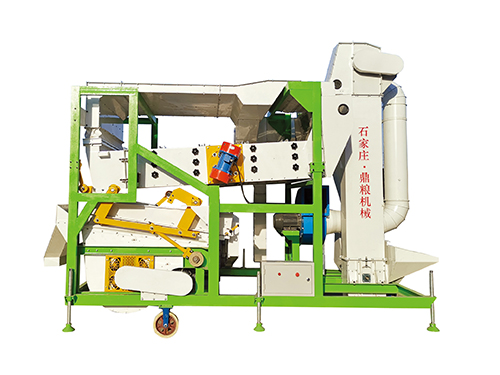
Grain cleaning machine can be adjusted, and adjustment is one of their core functions. This allows them to adapt to different crops, varieties and impurity characteristics for efficient cleaning.
According to public information, mainstream grain cleaning machines (especially gravity-type, air-screen type and other models) support multiple adjustable parameters:
Longitudinal inclination of the sieve bed: Usually adjustable within 0°–14°, affecting the forward speed of materials along the sieve surface.
Transverse inclination of the sieve bed: Generally adjustable within 0°–9°, controlling the lateral drift of light impurities.
Vibration frequency: Typical adjustment range is 400–1000 cycles per minute; some models achieve stepless speed regulation via frequency converters.
Air volume / air pressure: Adjustable by changing fan speed or damper opening to match the aerodynamic properties of different materials.
Screen configuration: Screens with different mesh sizes or types can be replaced to suit seeds or impurities of various particle sizes.
Feeding rate and baffle position: Some models allow adjustment of feeding speed and impurity baffle height to optimize separation efficiency.
These adjustment functions enable grain cleaning machine to effectively remove impurities such as glumes, stones, shriveled grains and insect-damaged grains. They are suitable for a variety of crops including wheat, corn, rice, soybeans and vegetable seeds.