

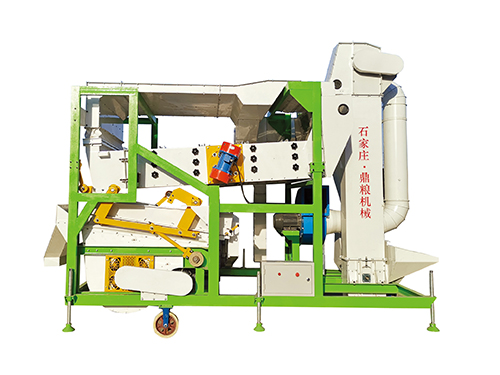
The sorting accuracy of a sesame cleaning machine mainly depends on five dimensions: differences in physical properties of materials, sensor recognition capability, response speed of actuators, and feeding uniformity.
1.Intrinsic Material Properties
The greater the differences between sesame seeds and impurities in size, specific gravity, color/spectral characteristics and shape, the easier the separation. Accuracy will drop significantly if impurities share similar particle sizes with sesame or feature extremely light color.
2.Optical Sensing System
Camera resolution, light source stability and selection of spectral bands determine whether subtle defects can be captured. High-resolution CCD/CMOS sensors combined with multispectral imaging are capable of identifying discolored grains or internally deteriorated seeds invisible to human eyes.
3.Algorithms and Decision Logic
Key factors include the advancement of image processing algorithms, flexibility of threshold setting, and anti-overlap interference performance. When multiple impurities appear within one frame, single-frame processing may lead to missed rejection. A re-sorting structure can improve sorting accuracy.
4.Actuation and Mechanical Operating Conditions
Involving nozzle valve response time, precision of airflow ejection, and speed of conveyor belts/chutes. Excessively high running speed shortens reaction time and causes false rejection or missed rejection. Uneven feeding resulting in overly thick material layers also degrading classification performance.
5.Operating Parameter Settings
Parameters include flow rate per unit screen width, feeding uniformity, vibration frequency and deck inclination (for screen-type machines). Excessive flow rate causes failure of material stratification, and feed segregation reduces the pass rate of single-particle inspection.
The practical sorting accuracy is a coupling result of all above factors. It is necessary to select the corresponding machine model and optimize process parameters according to specific impurity types of sesame (such as stones, moldy seeds, discolored grains and dust). No single indicator can determine the final separation effect.