

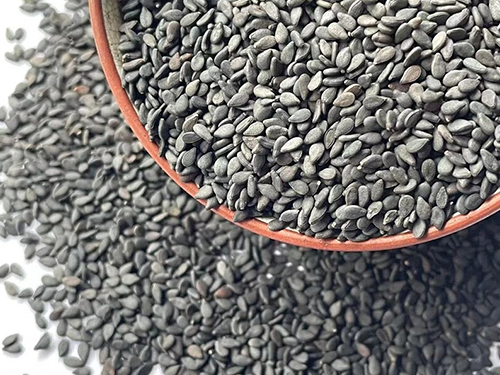
Sesame Air screen cleaning machine
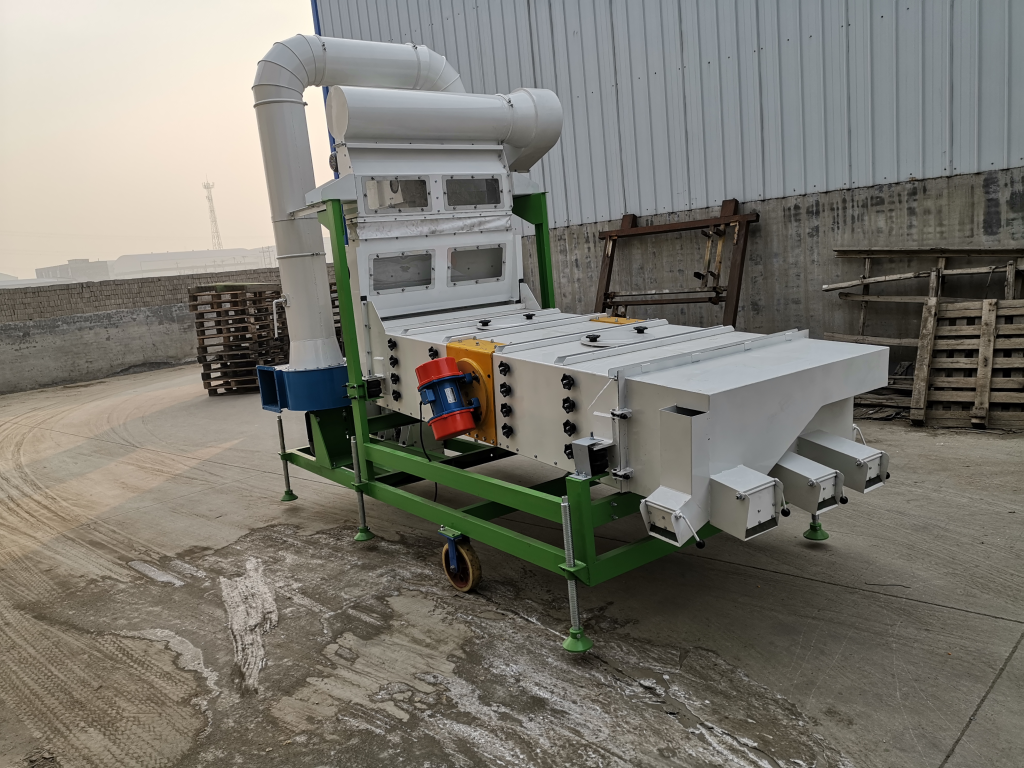
Primary screening (vibration screening – graded by size):
This is the most crucial step. Sesame seeds are transported onto one or more stacked vibrating screens.
Screen design: The screen has a specific pore size (mesh).
Upper layer sieve: with a larger aperture, it mainly intercepts impurities larger than sesame seeds, such as straw, large soil blocks, large stones, etc. These large impurities are left above the sieve and discharged through the discharge port.
Middle layer sieve: The pore size is slightly larger than or equal to the size of standard sesame particles. This is the main collection layer of ‘good sesame’. Sesame seeds of appropriate size will pass through the upper sieve, fall onto the middle sieve, and may pass through the middle sieve (if designed to allow good sesame seeds to pass) or stay in the middle sieve (if designed to allow good sesame seeds to stay). Finally, good sesame seeds that meet the size requirements are collected.
Bottom sieve: with the smallest pore size, smaller than standard sesame particles. Its function is to screen out impurities smaller than sesame seeds, such as fine sand, dust, crushed sesame seeds, extremely small stones, and some flattened grains. These small impurities are discharged through the bottom sieve.
Vibration effect: The screen body undergoes high-frequency vibration or reciprocating motion under the drive of the motor. This vibration causes sesame seeds to continuously jump, roll, and move forward on the sieve surface
Promote stratification: Large and small particles automatically stratify during vibration, and small particles sink and contact the sieve mesh.
Improve pass rate: Help sesame seeds and small impurities pass through sieve holes that match their size faster.
Prevent blockage: Vibration reduces the possibility of sesame or impurities getting stuck in the sieve holes.
Material conveying: Push sesame and impurities forward along the screen surface to complete the screening process and enter different outlets.
Wind selection (separation of specific gravity and light impurities):
Usually carried out simultaneously or after vibration screening. One or more fans generate controllable airflow (usually suction or blowing). The airflow passes through the falling sesame stream or the material layer on the vibrating screen.
Principle: Utilize the difference in suspension velocity between sesame seeds and light impurities (such as dust, broken husks, hair, light straw fragments, flattened sesame seeds) in the airflow. Lighter impurities are carried away by the airflow and collected in dust removal systems such as bag filters and cyclone separators. Heavier and fuller sesame seeds are basically unaffected or have little change in their falling trajectory, and continue to fall and collect along their original path.
At this point, the primary screening of sesame has been completed, and the purity of sesame has now reached 95%. Among them, small dust, sesame sized stones, and metal impurities with iron properties have not been distinguished yet. If you need to further improve the purity of sesame, you will need sesame magnetic separators, stone removal machines, and other equipment